How to Use AI for Email (Without It Backfiring on You)
There’s a particular kind of email everyone dreads writing — the one where the tone matters as much as the content, where you’re negotiating something delicate, apologizing, or trying to sound firm without sounding cold. AI has become the obvious shortcut for exactly these moments, and it genuinely helps. But there’s a growing body of research suggesting the shortcut has a cost that doesn’t show up until the recipient starts wondering who, or what, actually wrote what they just read- how to use AI for email.
Using AI for email well isn’t about whether to use it. Almost everyone already does, in some form. It’s about knowing which parts of an email benefit from AI’s help and which parts quietly lose something important when a machine writes them for you.
What AI Is Genuinely Good at in Your Inbox
Start with the clear wins, because there are real ones. AI is excellent at getting you from a blank page to a workable first draft — turning three bullet points of what you want to say into a coherent paragraph, adjusting the tone of something you’ve already written from blunt to diplomatic, summarizing a long thread you’re behind on, or drafting the tedious-but-necessary version of an email you’ve written a hundred times before, like a status update or a meeting recap. As we’ve covered in our breakdown of how ChatGPT actually works, the model is generating fluent, structured text by predicting likely word sequences — which happens to be precisely the skill that makes it useful for smoothing out a rough draft or restructuring a messy paragraph into something clear.
Where this works best is on the mechanical layer of an email: structure, clarity, tone-shifting, trimming a bloated message down to something a busy recipient will actually read. Those are real, useful problems, and AI solves them quickly.
The Trust Problem Nobody Talks About Enough
Here’s where it gets more complicated, and where a recent piece of academic research is worth taking seriously. A peer-reviewed study published in the International Journal of Business Communication, conducted by researchers at the University of Florida and the University of Southern California, had professionals evaluate workplace emails written with varying levels of AI assistance and found that only 40% to 52% of employees viewed a manager as sincere when the message was heavily AI-assisted, compared with 83% when the AI assistance was minimal. The emails themselves were rated as more polished and professional the more AI was involved — but that polish came at the direct expense of how genuine the sender seemed, especially for messages meant to feel personal or supportive.
The researchers also found something worth sitting with: people judged their own AI-assisted writing more generously than they judged the same level of AI assistance coming from someone else, particularly a supervisor. In other words, the trust penalty isn’t really about the writing quality — it’s about the recipient sensing that a moment meant to feel personal was outsourced, and reacting to that regardless of how well-crafted the resulting sentences are.
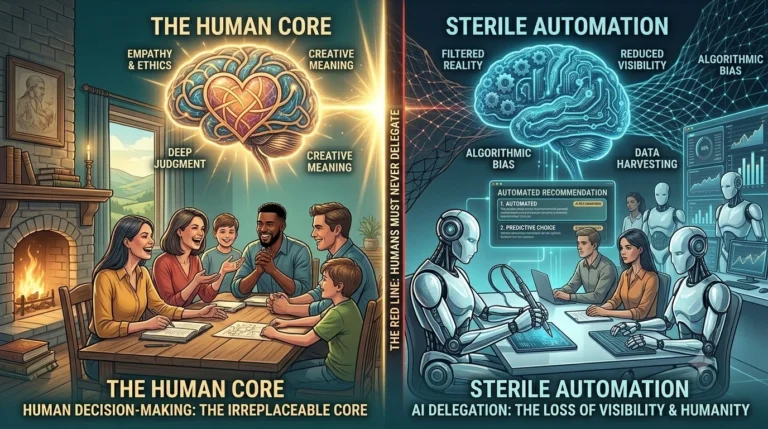
The practical takeaway isn’t “never use AI for important emails.” It’s that the more personal, relational, or high-stakes an email is — congratulating someone, addressing a conflict, delivering difficult news — the more that message benefits from being substantially your own words, even if AI helped you organize your thoughts first. Save the heavy AI lifting for the routine, low-stakes, high-volume messages where recipients aren’t looking for a sense of genuine personal connection in the first place.
The Compliance Layer Most People Forget About
If you’re using AI to help with marketing or outreach email at any real volume, there’s a legal dimension that doesn’t disappear just because a model wrote the copy. The FTC’s official compliance guide for the CAN-SPAM Act lays out core requirements for commercial email: accurate sender identification in the header, a subject line that isn’t deceptive about the message’s content, clear identification of the message as an advertisement where applicable, a valid physical postal address, and an easy, functioning way for recipients to opt out of future messages. None of these requirements are waived because an AI tool generated the subject line or the body copy — the sender is responsible for compliance regardless of what wrote the words, and CAN-SPAM violations can carry substantial penalties per email, not per campaign.
This matters more than it might seem, because AI makes it trivially easy to generate large volumes of subject-line variations and outreach copy quickly, and speed can outpace the compliance checklist if you’re not deliberately keeping it in view. Before an AI-drafted marketing email goes out at scale, it’s worth running it through the same compliance check you’d apply to anything a human copywriter produced — because legally, that’s exactly the standard it’s held to.
Keep the Sensitive Stuff Out of the Draft
Email is also one of the easiest places to accidentally overshare with an AI tool, because drafting help often means pasting in context — the original message you’re replying to, background on a situation, sometimes an entire thread. If that context includes a client’s confidential details, a colleague’s personal situation, financial specifics, or anything covered by a confidentiality obligation, that information shouldn’t be entered into a general-purpose AI tool without knowing exactly how the platform handles it. Our guide to what data you should never give AI covers this in more depth, but the short version for email specifically: paraphrase the sensitive parts, use placeholder names, or strip identifying details before you paste a thread into a drafting tool.
Don’t Let AI State Facts You Haven’t Checked
The other quiet risk is factual. If you ask AI to draft an email that includes a specific number, a commitment, a policy detail, or a claim about what was previously agreed, treat every one of those specifics as something to verify before sending, not something to trust because it reads confidently. This is the same structural issue that shows up anywhere a language model generates text — it produces the most statistically plausible continuation of your prompt, which isn’t the same thing as a verified fact, and an email is a particularly bad place for that gap to surface, since it often becomes a record people rely on later.
A Practical Way to Actually Do This
Put together, a workable approach looks less like a rule and more like a quick internal gut-check before you hit send:
Match the AI’s involvement to the stakes. Routine, transactional, high-volume messages are a great fit for heavy AI assistance. Personal, relational, or difficult messages hold up better when the core sentiment is genuinely yours, even if AI helped you find the right structure.
Treat AI drafts as a starting point, not a final answer. Read the draft as if a colleague wrote it and you’re the one accountable for what it says — because you are, the moment you hit send.
Verify anything specific. Numbers, commitments, dates, and claims about prior conversations need a human check before they leave your outbox.
Keep confidential material out of the drafting tool. Paraphrase or anonymize before you paste sensitive context into an AI assistant.
Hold marketing email to the same compliance bar regardless of who wrote it. AI-generated subject lines and copy are still subject to the same CAN-SPAM requirements as anything a person wrote by hand.
Why Detection Matters More Than People Assume
There’s a related wrinkle worth understanding: AI-written email is often more detectable than people using the tools tend to assume, and that detectability itself carries consequences beyond the sincerity gap. Research on AI-mediated communication has found that when people become aware AI was involved somewhere in a set of messages, trust doesn’t just dip for the specific message that used it heavily — it can spread to other messages from the same sender, even ones written without much AI help at all. Once a colleague notices one email reads as noticeably smoother or more formulaic than your usual style, every subsequent message can get read with that same suspicion, whether or not AI was actually involved.
This is part of why the “match assistance to the stakes” approach matters more than a simple willingness to disclose AI use. It’s less about hiding that you used a tool and more about making sure the emails where personal connection is the actual point don’t read as generic or interchangeable — because once they do, the recipient’s attention shifts from what you’re saying to wondering who or what actually wrote it, and that shift is hard to undo once it happens.
Where AI Adds the Most Value With the Least Risk
It’s worth being specific about the sweet spot, because it’s a real one and it’s larger than the trust research might initially suggest. Drafting the skeleton of a difficult email — getting the structure and key points down — and then rewriting the actual sentences yourself captures most of AI’s time-saving benefit without most of the sincerity cost, because the final wording is still genuinely yours even though the organizing work wasn’t. Similarly, using AI to catch tone problems in a draft you already wrote — flagging where something reads as harsher or more ambiguous than intended — keeps you as the actual author while still getting a second set of eyes on how the message will land. Both of these fall short of full AI drafting, and both sidestep most of the sincerity penalty the research identified, because the sender’s own voice remains the dominant one in what actually gets sent.
The Real Skill Is Knowing Which Email You’re Writing
Underneath all of this is one distinction worth internalizing: some emails are primarily informational, and some are primarily relational, and AI is excellent at the first category and genuinely risky, unmanaged, in the second. A status update doesn’t need to feel like it came from you personally — it needs to be clear and correct. A note to someone going through something difficult does need to feel like it came from you, because that’s the entire point of sending it. Knowing which kind of email you’re about to write, before you decide how much of the drafting to hand off, is most of the skill here.
Frequently Asked Question
Does using AI to write emails make me seem less sincere?
It can, particularly for personal or relational messages. A peer-reviewed study from the University of Florida and University of Southern California found only 40% to 52% of employees viewed a manager as sincere when a message was heavily AI-assisted, compared with 83% when AI assistance was minimal, even though heavily AI-assisted messages were rated as more polished.
What kinds of emails are safe to write mostly with AI?
Routine, transactional, and high-volume messages, such as status updates, meeting recaps, or scheduling logistics, are well-suited to heavy AI assistance since recipients aren’t looking for a sense of personal connection. Personal, relational, or high-stakes messages, like difficult conversations or congratulations, hold up better when the core content is substantially your own words.
Do CAN-SPAM Act rules still apply if AI writes my marketing emails?
Yes. The FTC’s CAN-SPAM Act compliance requirements, including accurate sender identification, non-deceptive subject lines, a valid physical address, and a working opt-out mechanism, apply regardless of whether a human or an AI tool generated the email content. The sender remains legally responsible for compliance either way.
Is it safe to paste an email thread into an AI tool for drafting help?
Only if the thread doesn’t contain confidential client information, financial details, or anything covered by a confidentiality obligation. If it does, paraphrase the sensitive parts or use placeholder names before pasting it into a general-purpose AI drafting tool, since you generally can’t be certain how that platform stores or uses submitted content.
Should I fact-check facts or numbers that AI includes in an email draft?
Yes. AI-generated text is produced by predicting statistically plausible language, not by verifying facts, so any specific number, commitment, or claim about a prior conversation in an AI-drafted email should be checked before sending, since an email often becomes a record other people rely on later.
What’s the simplest rule for using AI in email well?
Match the level of AI involvement to what the email actually needs: heavy assistance for routine, informational messages, and lighter, more personally-written content for anything relational or high-stakes where the recipient is looking for genuine sincerity rather than just clarity.
Conclusion
AI genuinely earns its place in your email workflow for structure, clarity, and speed on the routine messages that make up most of an inbox. The research is just as clear that heavy AI involvement quietly erodes how sincere you seem on the messages where sincerity was the entire point of writing at all.
The fix isn’t choosing AI or no AI — it’s matching the level of help to what the message actually needs, verifying anything factual before it goes out, and keeping compliance and confidentiality in view regardless of who or what drafted the words. That’s a genuinely small set of habits for a meaningful reduction in risk.