
Stoic Decision-Making Framework: High-Pressure Tactics for Tech & Product
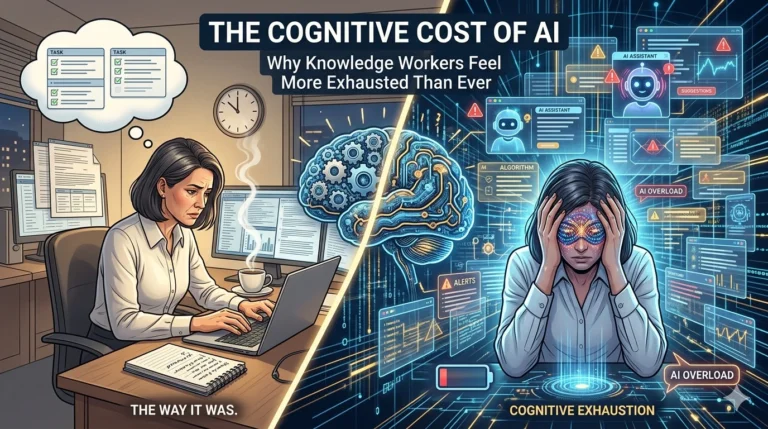
It’s a Wednesday afternoon in the middle of a release cycle. The QA lead just flagged a “Showstopper” bug in the legacy module, your biggest enterprise client is threatening to churn if their feature isn’t delivered by Friday, and half your engineering team is down with the seasonal flu. In the background, your Slack is a waterfall of red notification pings.
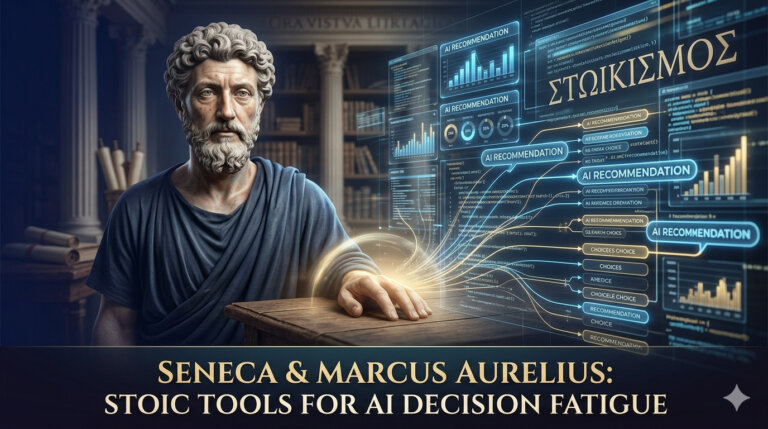
In this moment, your pulse is racing. Your “lizard brain”—the amygdala—is screaming at you to do something, anything, to stop the pain. This is where most leaders make the “Panic Pivot,” a decision driven by cortisol rather than logic. But there is a 2,000-year-old operating system designed specifically for this kind of battlefield: The Stoic Decision-Making Framework.
The Philosophy of the Product Pivot
Stoicism is often misunderstood as “having no emotions.” In reality, Stoicism is about objective clarity. It’s the ability to strip away the emotional “story” we tell ourselves about a crisis and see the raw data underneath. For a Product Manager or Tech Lead, this is the ultimate competitive advantage.
“It’s not what happens to you, but how you react to it that matters.” — Epictetus
When we make decisions under pressure, we aren’t just fighting external deadlines; we are fighting internal biases. According to research from the Harvard Business Review, high-stress environments trigger “cognitive tunneling,” where our focus narrows so much that we miss obvious, better alternatives. Stoicism acts as a wide-angle lens, forcing us to zoom out and see the full landscape before we commit.
Phase 1: The Filter of Control (Objective Filtering)
The most foundational tool in the Stoic kit is the Dichotomy of Control. In tech, we often conflate our concerns with our influence. We stress about the market, the competitors’ moves, and the user’s reaction—none of which we actually control.
Template: The Control Audit
Before making a high-stakes choice, draw two columns:
- Column A (Internal/Controllable): My team’s effort, my transparency with stakeholders, the quality of our current sprint code, my reaction to the bug.
- Column B (External/Uncontrollable): The client’s decision to churn, the stock price, when the API vendor fixes their outage, the “noise” on social media.
The Stoic Rule: You are forbidden from spending more than 5% of your mental energy on Column B. Redirect 95% of your focus to optimizing Column A. By ruthlessly filtering out the uncontrollable, you free up the cognitive bandwidth needed to solve the actual problem.
Phase 2: Premeditatio Malorum (The Product Pre-Mortem)
In the tech world, we love the “Post-Mortem”—dissecting a failure after the damage is done. The Stoics preferred the Pre-Mortem. By calmly visualizing everything that could go wrong before it happens, you neutralize the shock. When the “worst-case scenario” actually occurs, you don’t panic; you execute the plan you wrote while you were calm.
Example: The High-Risk Feature Launch
Imagine you are launching an AI-driven personalization engine. Instead of just visualizing success, the Stoic PM asks: “What if the model produces biased results? What if the server latency spikes? What if the users hate the new UI?”
By doing this, you build contingency modules (fallback designs, rate limiters) that make the final decision more robust. You are effectively “load-balancing” your emotional response before the traffic hits.
Phase 3: View From Above (Contextual Scaling)
When you are in the weeds of a project, a single delayed ticket feels like an existential threat. The Stoic practice of the “View From Above” forces you to zoom out. Is this bug going to matter in five years? In the history of the company? In the context of the entire industry?
This isn’t about being indifferent; it’s about re-prioritization. It prevents you from burning out your engineering team on a “critical” fix that is actually just a cosmetic inconvenience. It allows you to protect the long-term health of the system over the short-term noise of a loud stakeholder.
Phase 4: Rational Consent (The Logic Check)
The Stoics believed that between a “trigger” and an “action,” there is a space where we give consent to our impulses. Just because you feel like you should fire off an angry email to the vendor doesn’t mean you have to. You can observe the impulse, recognize it as a biological reaction to stress, and then choose a more rational path.
Template: The Decision Log (Stoic Edition)
- The Event: What happened? (Be objective—no emotional adjectives).
- The Impulse: What is my gut telling me to do right now?
- The Virtue Check: Does this action align with Wisdom, Justice, Courage, and Temperance?
- The Action: Based on the above, what is the most logical step?
The Stoic in the Agile World
We’ve discussed how this applies to individuals, but it works for teams too. An Agile team that adopts the Stoic framework is “antifragile.” They don’t just survive changing requirements; they use the friction to improve their internal processes. They move from “Why are they changing the scope again?” to “The scope has changed; what is the most efficient use of our current capacity?”
For more on how to apply these mindsets to your workflow, check out our related guides on The Stoic Scrum and The Modular Mind for Habit Building. These frameworks work in tandem to create a high-performance, low-burnout career.
FAQ: Stoic Decision-Making at Work
Q: Does Stoicism make you passive or “slow” at making decisions? A: Quite the opposite. By removing the emotional “clutter” and focusing only on what you control, you actually make decisions faster and with higher conviction. You aren’t paralyzed by “What if?” because you’ve already visualized the “What if.”
Q: How do I handle a boss who isn’t Stoic and is panicking? A: You cannot control your boss’s reaction. You can control the data you present and the calm demeanor you maintain. Stoicism is infectious; when a leader remains rational during a crisis, it naturally de-escalates the people around them.
Q: Can I use this for my personal life too? A: Absolutely. The Stoic Framework is a universal operating system. Whether you are deciding on a career pivot or managing a family crisis, the Dichotomy of Control remains the most effective tool in the human toolkit.
Conclusion: The Architecture of Excellence
In the tech world, we spend millions of dollars on system architecture, load balancing, and redundancy. It is time we spent the same effort on our mental architecture. The Stoic Decision-Making Framework isn’t just about surviving your job; it’s about mastering it. It’s about being the person who, when everyone else is losing their heads, is looking at the board and seeing the path forward.
Don’t wait for the next crisis to start. Practice the Control Audit on a small choice today. Build your “Inner Citadel” brick by brick, and when the storm hits, you’ll be ready.
Sources:
- American Psychological Association: Stress and Decision Making.
- Ryan Holiday: The Obstacle Is the Way.
- Marcus Aurelius: Meditations.